
Air-Free Patient Warming: The Safer, Smarter Alternative to Forced-Air Warming
Why Hospitals Are Moving Away from Forced-Air Warming (FAW)
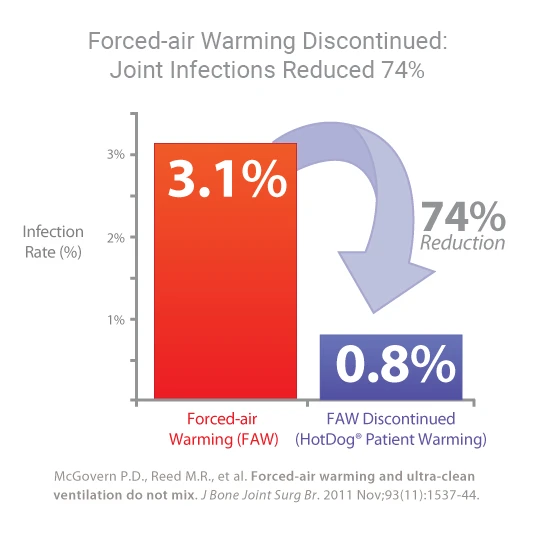
Studies show that FAW waste heat significantly increases airborne contamination in the sterile field. FAW has been linked to a 288% increase in deep joint infection rates. (McGovern 2011).
The Evidence Against Forced-Air Warming
- McGovern Study (2011): Patients using FAW had a 3.1% infection rate compared to 0.8% after FAW was discontinued. Air-free warming was used instead.
- Belani Study (2013): FAW exhaust directs non-sterile air into the sterile field.
- Legg & Hammer Study (2013): FAW increases airborne contaminants by 2,000 times.
- See Research Summary for all of the studies documenting the risks of FAW
How Forced-Air Warming Spreads Contaminants
FAW blankets release excess heat that vents into the operating room near the surgical field. The heat energy creates airflow disturbances in a variety of ways that can all introduce contaminants into the sterile field.
1. Waste Heat Rises Under Drapes
FAW waste heat escapes under the drapes, lifting contaminants into the sterile field.
McGovern, JBJSBr, 2011: Patients using FAW had a 3.1% infection rate compared to 0.8% after FAW was discontinued. Air-free warming was used instead.
2. Exhaust Air Travels Over the Anesthesia Drape
FAW’s exhaust directs non-sterile air over the anesthesia drape into the surgical field.
Belani, A&A, 2013: FAW exhaust mobilized airborne contaminants into the sterile field.
3. Excess Radiant Heat Creates Air Vortices
FAW’s radiant heat causes air vortices, pulling contaminants from the OR floor onto the surgical site.
Legg & Hammer, Bone Joint J, 2013: 2,000x more airborne contaminant particles found with FAW.
HotDog Air-Free Warming: The Proven Solution to FAW
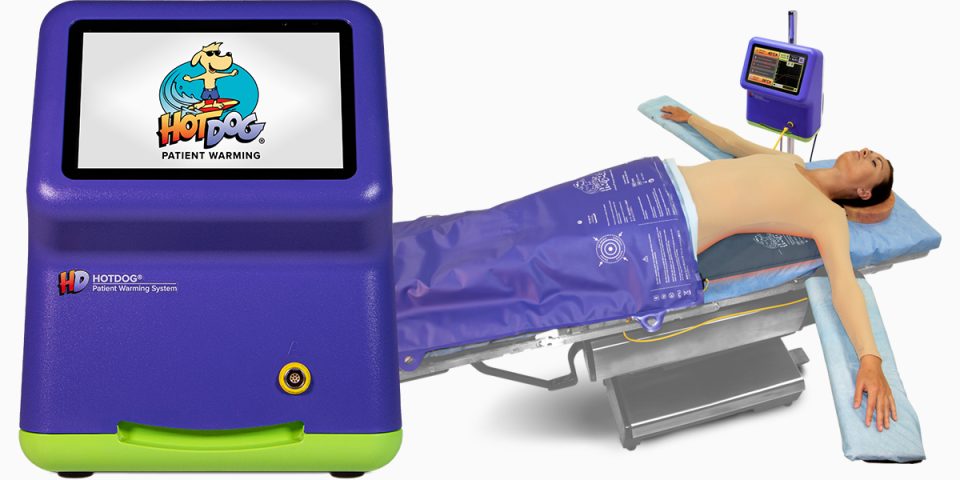
No Waste Heat – Eliminates FAW’s airborne contamination risk.
74% Lower Joint Infection Risk – When Forced-air discontinued. Based on McGovern et al., 2011.
ERAS Compliant – Meets normothermia guidelines without FAW contamination.
Cost-Effective – Lower operational costs than FAW systems.
The Chain of Infection: Why FAW is a Key Transmission Risk
FAW waste heat is the “missing link” in the chain of infection, mobilizing bacteria into the sterile field.
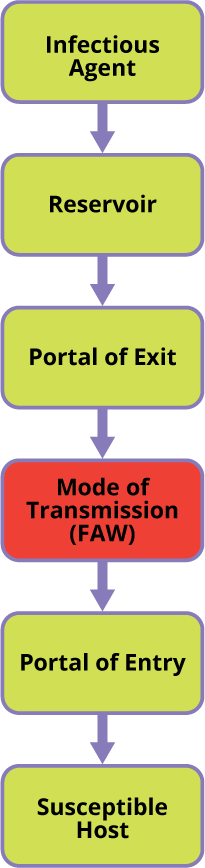
Infectious Agent:
Bacteria present in hospitals.
Reservoir:
Bacteria shed from surgical staff.
Portal of Exit:
Contaminants settle near the OR floor.
Mode of Transmission (FAW):
Waste heat lifts bacteria into the air.
Portal of Entry:
Bacteria enter through the surgical wound.
Susceptible Host:
Patients with implants are at high risk of deep joint infections.
Real Hospitals Are Replacing Forced-Air Warming with Air-Free HotDog
Leading hospitals with are joining the air-free patient warming movement. Want to join them?





Research & Clinical Studies Supporting Air-Free Warming
McGovern, JBJSBr, 2011 – Deep joint infection rate went from 3.1% vs. 0.8% when FAW discontinued. HotDog was used for air-free warming.
“Patient warming [Bair Hugger] ventilation disruption was associated with a significant increase in deep joint infections, as demonstrated by an elevated infection odds-ratio (3.8, p=0.028) for the forced air versus conductive fabric patient groups (n=1437 cases, 2.5-year period).” The researchers concluded, “Air-free warming is, therefore, recommended over forced-air warming for orthopedic procedures.”
Belani, A&A, 2013 – FAW waste heat directs non-sterile air into the sterile field.
“The direct mass-flow exhaust from forced-air warming generated hot-air convection currents that mobilized ‘bubbles’ over the anesthesia drape and into the surgical site.” Conductive fabric warming had no such effect.
Legg & Hammer, Bone Joint J, 2013 – FAW causes 2,000x more airborne contaminant particles in the OR.
“The waste heat from forced-air warming (FAW) torso blankets radiated through the surgical drape to form tornado-like vortexes of rapidly spinning air near the surgical site. The vortexes sucked contaminated air from the operating room floor and deposited it over the surgical wound. 2,000 times more contaminant particles were found in the air over the wound with FAW than with air-free HotDog conductive warming. With HotDog, only 1,000 particles per cubic meter of air were present. With FAW, the particle count was 2,174,000 per cubic meter, an increase of 217,300%.”
ERAS Guidelines, 2020 – Cautioned against FAW due to increased infection risk.
“However, the use of forced air-warming is not recommended as there is evidence that this is associated with an increased risk of infection (McGovern et al. 2011, Koc et al. 2017).”
Air-Free Warming Products

WaffleGrip® Trendelenburg Patient Positioner

The ONLY effective warming solution for Trendelenburg position

