

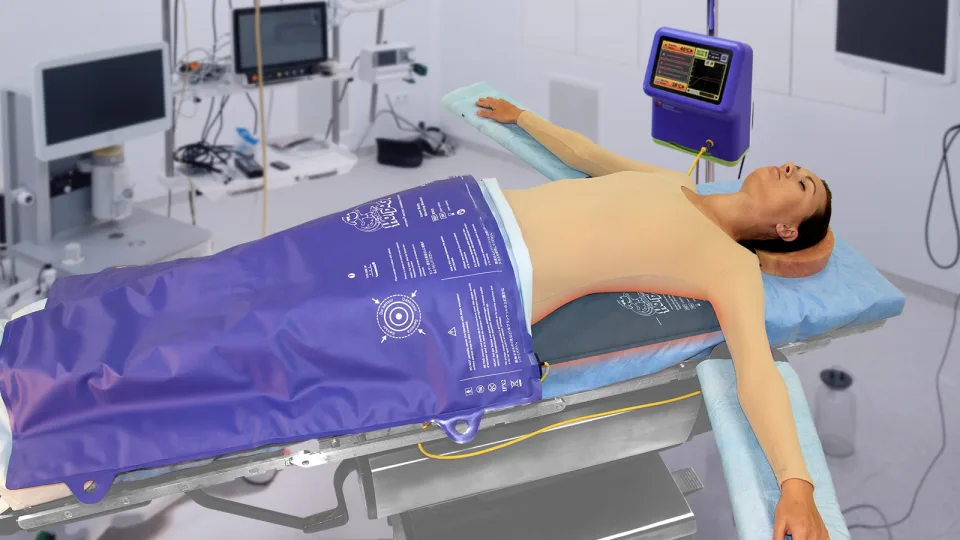
If Bair Hugger® or other forced-air warming blankets are backordered, the immediate constraint is not the warming unit. It is the disposable blanket required for each patient.
Hospitals can conserve existing inventory or look for additional forced-air blankets through supply channels. Before connecting another manufacturer’s blanket to an existing warming unit, facilities should verify compatibility and the manufacturer’s instructions for use. Solventum’s Model 775 instructions direct users to attach the warming unit hose only to a Bair Hugger warming blanket.
A shortage also creates another option: move some cases to a warming system that does not require a new disposable warming blanket for every procedure.
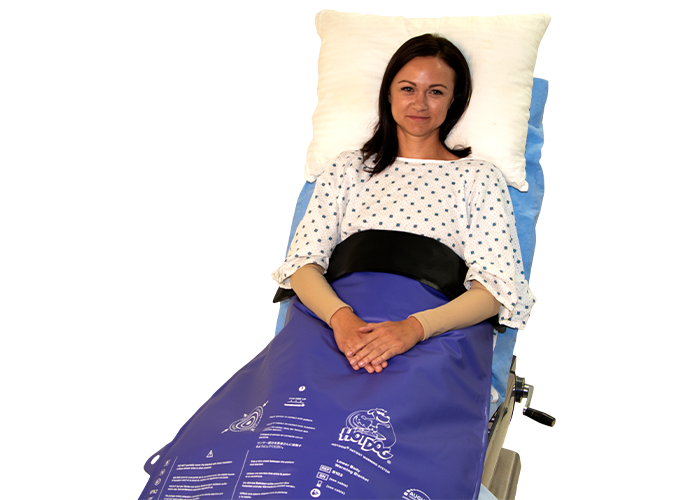
HotDog Patient Warming uses reusable conductive Warming Blankets and underbody Warming Mattresses instead of a blower, hose, and disposable forced-air blanket. HotDog reusable warming devices are designed for easy cleaning.
Hospitals do not need to replace forced-air warming throughout the entire facility to reduce blanket consumption. HotDog can be introduced in selected ORs or procedure types, reducing the number of cases that consume a disposable forced-air blanket each day.
That changes the shortage question from:
How many forced-air blankets do we have left?
to:
How many of our daily cases still need one?
Reduce forced-air blanket consumption without converting every OR
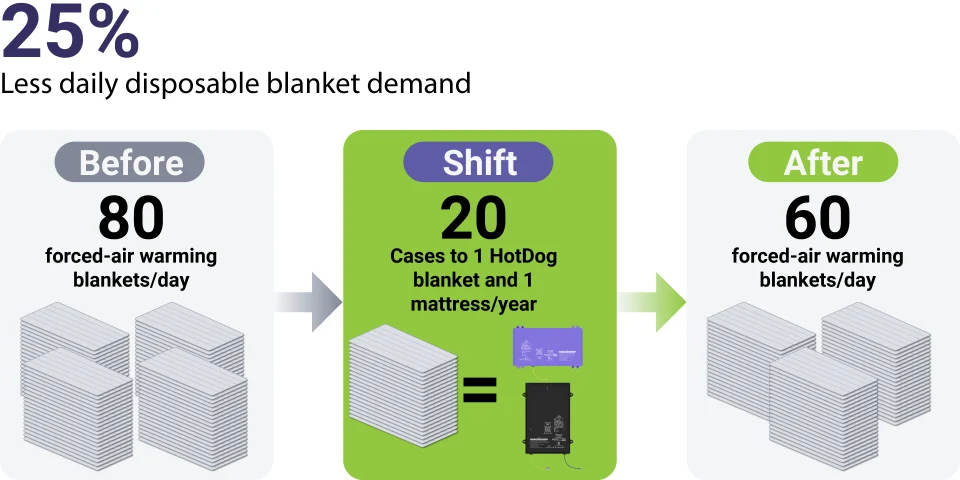
During a shortage, the rate of blanket consumption can matter as much as the number of blankets currently in storage.
For example, if a hospital uses 80 forced-air warming blankets per day and moves 20 of those cases to reusable warming, its forced-air blanket consumption drops by 25%.
That can extend existing inventory without requiring an immediate hospital-wide conversion.
A small HotDog deployment can provide additional warming capacity in selected rooms. A larger deployment can move a high-volume service line away from disposable warming. If the system fits the hospital’s clinical and operational needs, it can then be expanded further.
The goal does not have to be replacing every forced-air system at once.
It can simply be reducing the number of procedures that require another disposable blanket.
Currently dealing with a forced-air warming blanket backorder?
[Build a HotDog Deployment Plan for Your Facility]
Where should a hospital introduce reusable warming first?
Start where the equipment will have the greatest effect on disposable use and where clinicians can evaluate it consistently.
Good starting points may include:
- High-volume operating rooms
- Orthopedic and longer surgical procedures
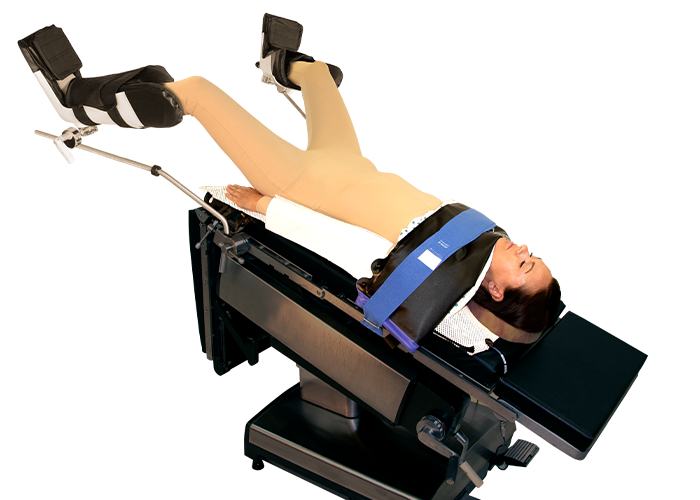
- Robotic and Trendelenburg procedures
- Rooms consuming large numbers of disposable warming blankets
- Procedures where underbody warming can increase available warming surface area
- A defined group of anesthesia or perioperative clinicians who can evaluate the system across multiple procedure types
This allows the hospital to concentrate reusable warming capacity where it can reduce the greatest number of disposable blankets from daily use.
For a hospital waiting on its next forced-air shipment, every case moved to reusable warming preserves another disposable blanket for a case that still needs one.
How HotDog replaces disposable forced-air warming
Forced-air warming transfers heated air through a disposable blanket.
HotDog uses flexible conductive warming technology that transfers heat directly to the patient through reusable Warming Blankets and Warming Mattresses.
That creates several ways to warm the patient.
HotDog can warm from above and below the patient, simultaneously. The WC77 Multiport Controller can operate up to four Warming Blankets and one Warming Mattress at the same time, allowing clinicians to maximize available patient surface area based on the procedure.
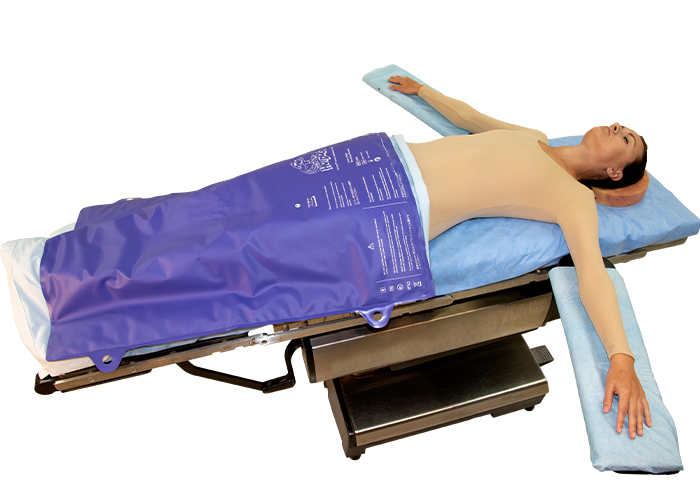
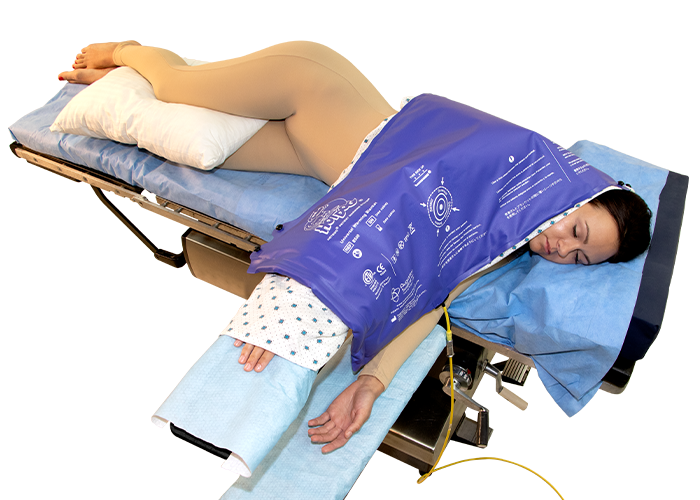
HotDog positioning guidance includes configurations for supine, arms-tucked supine, lateral, lithotomy, beach chair, spine, orthopedic trauma, Trendelenburg, and many other procedures.
Underbody warming can be particularly useful when surgical access limits how much of the patient can be covered from above. A Warming Mattress can provide conductive heat beneath the patient while leaving the surgical field accessible, with Warming Blankets added over other available areas when appropriate.
HotDog’s BEST warming practices emphasize four principles:
- Body Surface Area: Warm as much available surface area as possible.
- Early Start: Begin warming as early as practical.
- Sensor Contact: Maintain contact between the patient and the device sensor.
- Thin Barrier: Minimize insulating material between the patient and warming device.
The objective is not simply to find another disposable blanket shaped like the one that is unavailable. It is to give clinicians another complete method of maintaining perioperative normothermia.
Supine
Lateral
Pre and Post-Op
Trendelenburg
Can conductive warming replace forced-air clinically?
Changing warming technologies is not only a supply-chain decision. Anesthesia and perioperative teams need confidence that the alternative can maintain patient temperature across the procedures where it will be used.
HotDog has been evaluated against forced-air warming in multiple clinical studies.
Published research has found conductive HotDog warming comparable to forced-air warming in some procedure types and more effective in studies where conductive warming utilized its ability to cover more surface area above and below the patient.
That distinction matters because warming effectiveness depends on more than the heating technology itself. Available warming surface area, when warming begins, patient contact, procedure type, and warming configuration all affect heat transfer.
For that reason, a hospital evaluating HotDog should evaluate the complete warming strategy rather than simply comparing one HotDog Blanket with one forced-air blanket.
Hospitals considering a broader conversion can review the clinical evidence and compare HotDog with forced-air warming in their own procedure mix.
Dependable patient warming supply
A reusable system changes the supply model rather than simply changing the supplier.
HotDog Warming Blankets and Mattresses remain in the facility and are used across many procedures during their service life. Supply chain still needs to maintain an appropriate inventory of warming equipment, but routine warming no longer requires another disposable warming blanket to arrive for every patient.
That can reduce the recurring work tied to disposable warming products, including ordering, receiving, storing, transporting, and disposal. Actual savings vary by case volume, utilization, equipment needs, acquisition method and contracted pricing.
A shortage may be what prompts the evaluation, but the reduced dependence on disposable warming can continue long after supply returns to normal.
Give clinicians enough time to evaluate the change
The ideal time to introduce another warming system is before the last available box of forced-air blankets is opened.
A partial deployment gives anesthesia and perioperative staff time to learn HotDog while both warming options remain available.
Training should focus on the procedures where HotDog will actually be used. Since conductive warming is a new method, staff will only need a short in-service training session with our team to make switching simple and easy.
A defined initial deployment also makes the results easier to evaluate.
Hospitals can monitor:
- Patient temperature outcomes
- Clinician experience with setup and positioning
- Number of forced-air blankets no longer consumed
- Equipment availability between cases
- Cleaning and turnover workflow
- Whether additional Blankets, Mattresses, or Controllers are needed
If the deployment works well, expansion becomes easier to plan because the hospital has its own clinical and operational experience rather than relying only on product specifications.
A temporary shortage can lead to a permanent reduction in disposable use
A hospital does not have to choose between continuing forced-air warming everywhere and replacing it everywhere.
HotDog can be introduced as additional warming capacity during a shortage, deployed in selected ORs as part of a mixed warming program, expanded across high-volume service lines, or implemented more broadly as an alternative to forced-air warming.
For facilities currently short on Bair Hugger or other forced-air warming blankets, a partial transition can accomplish two things at the same time:
Reduce immediate pressure on remaining disposable inventory while giving clinicians a real-world evaluation of reusable patient warming.
When normal forced-air supply returns, the hospital can then decide whether those cases should return to disposable warming or remain on the reusable system.
That decision can be based on the hospital’s own patient temperature results, procedure mix, staff experience, supply use, cost, and workflow rather than the pressure of an active backorder.
Having Trouble Getting Forced-Air Warming Blankets?
HotDog can be introduced in selected operating rooms to reduce disposable blanket consumption without requiring an immediate facility-wide conversion.
Tell us about your facility, number of ORs, and how soon oyu nee an alternative. Augustine Surgical can help identify where a HotDog deployment could reduce forced-air blanket consumption most effectively.
Get My HotDog Deployment Plan
For hospitals considering a permanent change, see A Reusable Alternative to Bair Hugger® Forced-air Warming: HotDog Patient Warming.
Bair Hugger is a trademark of Solventum or its affiliates. HotDog is a registered trademark of Augustine Surgical, Inc.